
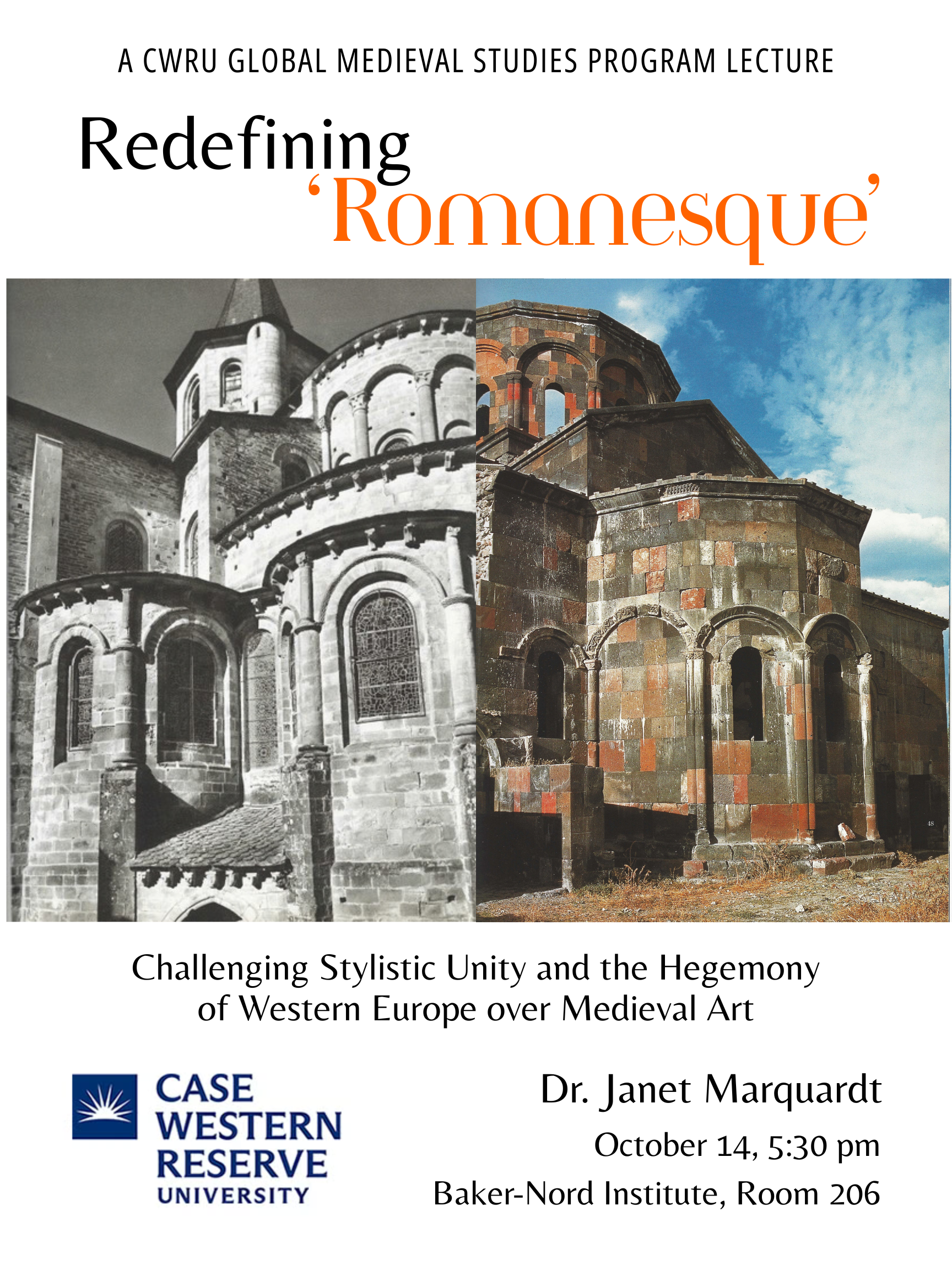
The focus of this talk is the extremely robust and innovative period of European art from approximately 1000-1200 we now call “Romanesque.” Coined in the early nineteenth century, “Romanesque” is a term that privileged particular “Roman-like” aspects of architectural construction but did not begin to cover the regional breadth of the myriad artistic amalgamations from Asia, Africa, and the Middle East present across the European continent. Then in the twentieth century, a French abbey published numerous series of richly illustrated books under the rubric “Zodiaque,” dedicated to restoring the artistic and spiritual drama of Romanesque art for modern viewers through edgy, graphic black-and-white photogravures that provided rich documentation for both travelers and scholars to study. The monks traveled widely but did not cross the “Iron Curtain” (except to visit the medieval colonial architecture of the “Holy Land”) and their highly influential repertoire reinforced traditional contentions that Romanesque was a product of the West even as their photographs proved the diversity of forms that can never be defined as a single style. Marquardt proposes a project that would offer a new definition of “Romanesque” and would take up once again the Zodiaque series to cover sites east of the Elbe River and Adriatic Sea—areas currently designated as the Balkans, Central and Eastern Europe, Anatolia and the Caucasus. What will European Romanesque look like if we assemble examples from the rest of the continent?